C-ENTRE: your inspiration on coaching in VET Entrepreneurship Education

Discussions

"An educator should switch roles based on a student’s emotional [...]"

In response to topic:
The educator’s role: knowledge transmitter or partner in growth?

Join the talk


Updates

July 6, 2026|

Date: June 13, 2026

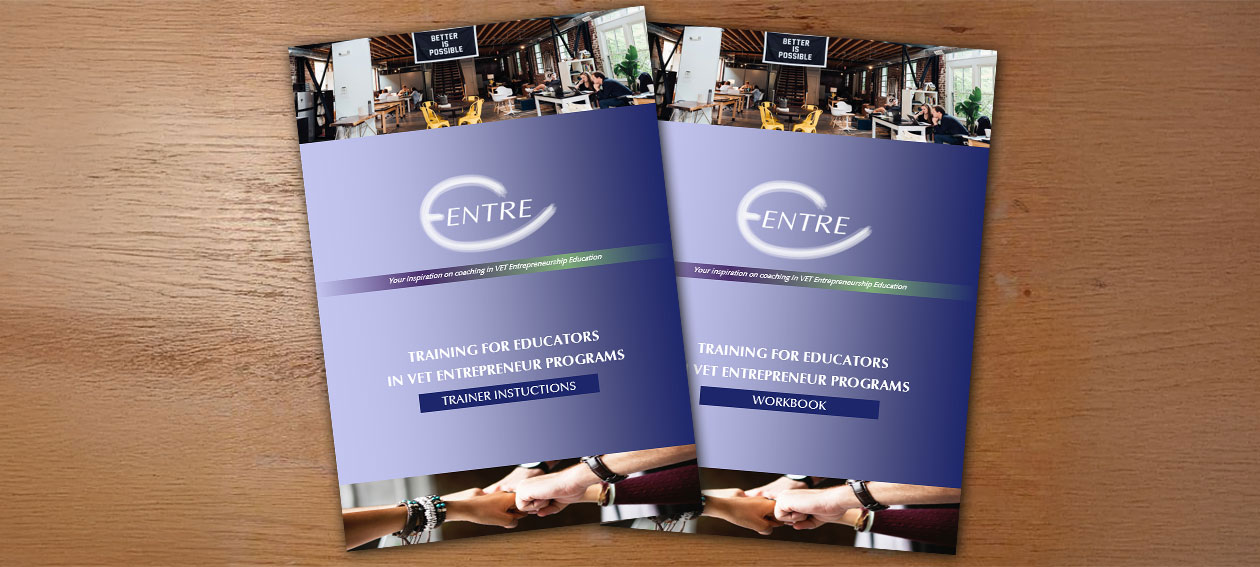
Free training for educators in VET entrepreneurship education about to be published!

Date: June 13, 2026

The C-ENTRE training programme is currently being finalised by the project partners. During the summer period, the full training package will be made freely available online.

The open-access release will include:

  • a complete theoretical framework for entrepreneurship education in VET
  • fully developed lesson plans and learning activities
  • practical tools and teaching resources
  • materials ready for immediate classroom implementation
  • availability in four languages (EN/NL/HU/PT)

Discover the content of the units here: (click for more information)

The training begins with a focus on empowerment, not as an academic concept, but as a practice embedded in the way educators listen, communicate, and relate to learners. By cultivating trust, promoting self-regulation, and facilitating constructive feedback, educators can build the conditions in which entrepreneurial thinking and personal growth can truly flourish.

Participants will learn that entrepreneurship is not just about business. This is  a life competence. This unit uses experiential learning to help trainers embrace uncertainty and value creation as tools for student empowerment.

The focus of this unit is to move from rigid planning to dynamic “validated learning,” where goals act as hypotheses to be tested through coaching, experimentation, and constant adaptation.

This unit focuses on the transformation of ideas into opportunities and opportunities into structured plans. Educators play a key role in helping students recognize the potential of their ideas, evaluate feasibility, and understand how value is created and delivered. By introducing foundational entrepreneurial tools and frameworks, educators can guide learners toward more strategic and realistic thinking without stifling their creativity.

Focus on experiential learning, where trainees will move beyond theoretical exercises and take ownership of realistic entrepreneurial experiences. The goal is to help them understand what it means to act as an entrepreneur, face challenges, make decisions under uncertainty, and learn from outcomes (both successes and failures).

Helping trainers to understand the principles of learner-centered guidance, how to provide constructive feedback, and how to support peers in taking ownership of their own learning.

All materials will be accessible via the C-ENTRE results page: https://c-entre.eu/results/

The programme reflects a shared understanding across the partnership: entrepreneurship education is most effective when educators are equipped not only to teach entrepreneurial concepts, but also to guide learners in developing the mindset and competences needed to act entrepreneurially in practice.

Practical tools on entrepreneurship education
HUB study visit The Netherlands: this September!

Tips & tricks

What if students don’t take feedback seriously?

Teach feedback literacy. Use peer coaching models so students learn to give and receive constructive, non-defensive feedback.

Quotes

C-ENTRE: your inspiration on coaching in VET Entrepreneurship Education

Go to Top